shape of the rainbow
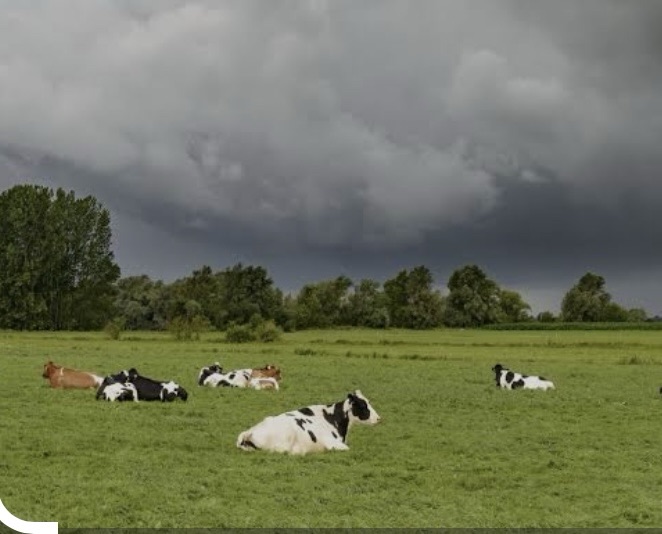
Payne’s grey cloud ready to pour
cows curled in the field
shape of the rainbow
Payne’s grey cloud ready to pour
cows curled in the field

hawkmoths sip at night
moonflowers bloom under stars
spider primed to strike.
last blossoms outside
gifts gather near the Coin Mint
petals on the path
______________________
a pink petal falls
after the cherry has bloomed —
confetti shower
_______________________
wisps of incense smoke
smell of cedar, sound of drum
monks and nuns chanting
___________________
peace and quiet reign
the sound of a butterfly
lichen are breathing
________________
ferns live by maple
stones rest by camellia
air tickles the leaves
___________________
kimono for tea
fragrance of ceremony
whisking green bubbles
____________________
fire, gold, wood, and drum
temple giant leads the chant
Bow. Pray. Bow, now smile
____________________
cherry petals fall
a dusting of snowflakes recalled
cable car rising
___________________
coffee cherry ripe
two green stones wrapped together
bound for china cup
____________________
sunshine and showers
play across the garden stones
a moist wind gusts cool
_________________
morning mist lingers
droplet hangs from cypress leaf
Fuji hides all day
__________________
in the hawk’s garden
a Samurai hunts wild ducks
green leaves grow again
_______________
Samurai wields sword
calligrapher wields brush
west wind wields breath
__________________
from the rocks, a smile
cedar tree bows low with grace
Sayönara, friend
_____________________
Blue Bear stories sing
Teddy’s eyes are firmly fixed
drawn by Shuto’s pen
_______________________
a gin and tonic
fresh energy in liquid
released by the gods
__________________
(unfinished)
Sadako Sasaki
Hibakusha
Tears holding hands
School friends together
Running races
Joyfully growing
Folding paper cranes
One thousand for peace
Thousands massacred
Wind, rain, and fire
Tears shed for you
Hiroshima.

In garden of hawks
A master has hunted ducks
Green leaves growing strong

A coffee cherry
Two fruit stones wrapped together
Bound for china cup
London plane trees line
a street where the Spire stands still
Pied wagtails have flown
Sunshine and showers
Twins dance on Mother Earth’s cheek
Father wind blows cool
_________________
In the hawk’s garden
a master has hunted ducks
green leaves grow again
_______________
Samurai wields sword
Calligrapher wields a brush
West wind wields a breath
Cherry blossom buds
Osaka to Kyoto
Warmth of rising sun
Let’s go to Japan
Flowering cherry blossom trees
Green pheasant landscape
Does travel tempt you?
Tantalising seduction
Come flying with me.
Where are you going?
Lightening time, warming soon
Green pheasant calling
Rain falls – a stream born
Poetry flows past a rock
Fresh ink on a page
On smooth still water
along an ambling current
insect waders skim.
(Image by Artificial Intelligence – to prompt by Paul O’Mahony)
I stand
against the crowd
I stand out from the crowd
I am an individual
odd
different
singular
misfit
awkward in my comfort
edgy in my skin
alive in my own atomic way.
I live my say
I give the best shot I can
every day.
I stand against the crowd
of wasters who fritter
their life away their way.
I waste my life my way
I fritter my days into
the oblivion I fashion
every step I say.
because I am who am
me
Condemned to be myself
I stand out from the crowd
comfortable in my discomforting way
that comes from every pore
every sore
every score of my expressions.
It’s my art
the heart of my song
the spleen that cleans my blood
seen in all my glory every time
I stand against the crowd.
Each and every difference
friction
grating
unconforming
uncomplying
understandable me.
See that fella
hovering on the edge
the one who isn’t fitting in
the one with the shifty eyes
the glint of his own.
You can smell
he’s an outsider
a weirdo
an awkward one
an individual
heart
a body of imagining
power
wealth
stealth
scheming to survive
the crowd
the collective view
the “what we all think”
thinkers.
I stand against the crowd
I stand out from the crowd
away from the crowd
proud of my own way
fiddling the melody
composed of notes
I’ve assembled from the crowd
playing the game I’ve invented
the rules I’ve annunciated
predicated on the shoulders
of giants who have fallen
in battle
against the crowd
castigated on shoulders
of heroes that have died
for the cause of being
themselves.
I reject the way of the crowd
every time my heart pumps
blood from the flat of my sole
to the peak of my imagination.
Consternation
I will cause.
Conflagration
I promise.
The instigation of the self
opinionated
author of my fate
creator of my faith
born to be wild
not filed away in a box.
I defy
I stand against the crowd
that would
categorise me
classify me
entomb me in place
where they ignore me
where they make me safe
from causing a splash
from making a difference
from changing
the course of history
the dreams of others
the Universe.
For such a cause
I stand against the crowd
I stand out from the crowd
to welcome you
fellow traveller
fellow awkward person
follower battler
for your way.
For your way is my way too
your way is yours
my way is mine
our way stands out from the crowd
We stand against the crowd.
We stand up for ourselves
We stand who stand.
Against the crowd
Unto death.
WE STAND.
Listen to the tree
Hug it if you like
Put your ear up close
Tell no one what you hear .
(work in progress)
Cricket is the curse of the bowling class,
an ode:
the catching team an echo,
the batting class a sestina,
the fielding team a muse.
Cricket is the curse of the tea break:
line, length, time, and rhyme,
bad light and rain.
Refrain stops play.
Cricket’s a mug’s game,
a heroic couplet,
yet more of the same.
A Haiku running between stumps,
legs and symbols before wicket
a foot, outside the line,
an Alexandrine.
A forward defense with cadence,
against the seam,
like a no ball, a simile,
Cricket’s a testing game:
the toss,
a full toss
hit for six. Epic.
The cover’s on.
the cover’s off,
a song.
The bat, the pen, the runs, the words,
a coin spins
out comes the side, and the ink.
The follow-on stanza,
mid-on,
mid-off,
side-on.
An innings defeat.
Cricket is the curse of the umpire’s hand,
a satire.
a verse at square leg.
Onomatopoeia.
a mug’s game of innings and googlies.
Pitch, bouncers and reverse swing.
Centuries and ironies.
Ducks and golden pairs.
Stress,
a wrong’un.
Englynion:
Two new openers
batting long boring innings – sleeping time
quite a crime every ball
blocking bowlers, playing crawl
soaking pressure, scoring nothing.
Drift, line, and length.
a flipper and villanelle.
flight through the air.
Cricket is the curse of the leg spinner,
the third man.
The tail, the tale, and off-cutter.
Metaphor.
Wisden’s dictionary.
Ashes and syllables.
Lords, the Gabba,
and the popping crease.

The pen is always heavy,
when it’s months since you lifted it.
The weight of the space left behind
undressed, unaddressed.
Time without colour,
days without commas,
seconds stripped asunder,
drunk on the spirit of everlasting
full stops.
———
This pen has a cough,
the sign of an infected life
lived as if there was no editor
round the corner
waiting.
No publisher
cracking teeth,
chewing toenails,
waiting
for the pen to impregnate the page with filth,
for the ink to copulate with lines
that conceive parables,
that deceive imaginations
so much that the nib cries for rest,
prays for time off
howls for sleep,
from having to be so good
and having to deliver best-selling sentences,
gobsmacking phrases,
gut-wrenching couplets.
——
No poet needs a pen.
The essential requirement for poetry is a mouth,
a voice box,
a larynx,
lungs.
We have ways of transcribing your dung,
software to soften your crudities,
Code.
——
Give us your guts, your flint, your rock.
—
We can knock you into marketable shape.
Give us your foulest wake,
your Finnegan.
I’ll even take your Sappho to bed
and snore ‘til dawn,
with her panting for more.
I’ll make Shakespeare disappear,
and Bashō re-appear
as a disgruntled dung beetle,
before I grant your pen
the right to light the rite of the brightening word-scape.
——
The Pen,
R.I.P.,
survived lovingly by its mother’s quill,
its significant other Bottle of spirits,
its children Procrastine and Prostatinus –
lies with coffin open all night
to the quickening sky,
in the front room of OMani’s Bookshop,
in the toilet of your treadmill,
in the dustbin of your mind,
in the gutter of your good manners,
waiting for eternity,
and, if that’s not long enough, tough on you,
with your expectations of Heaven,
with your confidence in being reincarnated
as the elephant god of wisdom,
or with at least a modicum of respect
for how you’ve served
the progeny of cave carvings,
the issue of hieroglyphical outbursts,
the offspring of juggled alphabets,
and the latest emojis.
Trend-setter you,
cursed be thy name.
——
No matter how heavy the pen,
no matter how sick the ink,
no matter how smelly the script,
no matter how disreputable the collection,
the air will carry your sentiments
alongside the letter Cain wrote to Abel,
the note Judas wrote to Joseph,
the missive Abraham scribbled to the Buddha,
all the smoke signals,
text messages,
emails,
phone calls
and whisperings.
The wind will amalgamate the lot,
and you will be branded
another infant in the long line.
Blue, blue, my pool is blue.
Blue is my sky.
How about you?
White, white, a butterfly flies.
White is my house.
How about you?
Black, black, the shadow’s black.
Black is my back.
How about you?
Black and white martins glide
smooth on the breeze.
How about you?
Blue, blue, forever be true.
What do you say?
How about you?
(in honour of Eavan Boland)
It was a London summer. It was dry.
Half of June was full of Downing Street,
the Tower of London,
Hampstead Heath,
Stoke Newington,
Speaker’s Corner,
the Abbey,
the City.
The other half was Chiswick,
ticket machines,
waybills,
route maps,
accident reports,
“Fares please.”
I worked on a bus.
It had a number.
There were stairs to climb,
passes to inspect,
cash to collect.
There was a woman. She got on in Camden Town.
She carried shopping. She knew where she was going.
She never spoke to me.
As I walked along the lower deck, issuing tickets,
she showed her travel pass.
I nodded and moved on.
She got off at Swiss Cottage.
I was sure she went on to Golders Green on the 28 bus.
She kept to herself. I wanted to follow her
back through what it had been like during the war
before she escaped Germany.
I wanted to know what happened to her family,
and if she lived alone in London.
I walked from Chalk Farm after work
past Primrose Hill to the bus stop where she got off.
I saw her going into a flower shop on a Friday afternoon.
I was curious. Did she buy them for herself, or for the cemetery?
By August, whenever my bus skirted Trafalgar Square
and drove down Whitehall, past Downing Street, around Parliament Square,
I imagined the bombing,
the woman who commanded the bus,
the woman who conducted the number 24.
The quiet woman recovering in Golders Green,
I asked myself whether she’d got a job
at the Ministry after D-Day.
Whatever she spoke of during the Blitz,
I wanted to know where her country was in those days
and where it was that long dry summer.
The Tower,
the Heath,
Hyde Park,
The Abbey,
Threadneedle Street
faded.
I went into and beyond the city,
put on the uniform and badge number 115364,
walked to the garage, signed in, sat in the canteen.
NBA, no bus available, hoping I’d be sent home early.
I went down the stairs into the output,
handed in my box, spare ticket rolls,
cash bags, the machine, and the key to the locker
on the Routemaster where I kept my things.
I walked to Camden Town hoping to see her again
with the face of an unbent survivor.

 From Bath to Cork with baby Grace